
In most markets a new online casino is just a new option. In New Zealand in 2026 it is a legal question first. Under the Online Casino Gambling Act 2026, only operators that were already offering to New Zealand customers on 1 May 2026 may keep doing so through the transition. A brand that arrived after that date has no transitional right at all.
So before comparing welcome offers, it is worth asking a different question about any casino calling itself new: new to the market, or new only as a brand name over an operator that has been here for years? The answer changes what you are actually signing up to. This page was last checked on 24 September 2026.
Why “new” is not a neutral word this year
The Act came into force on 1 May 2026. From that date, new offshore entrants were barred from starting to serve New Zealand players, and the operators already here entered a transitional period that ends on 1 December 2026. The Department of Internal Affairs (DIA) states that it is legal for New Zealanders to gamble with these transitional providers, while warning that the activity remains unregulated until the licensed market exists.
That produces an odd result. A casino that genuinely launched into New Zealand in mid 2026 is in a worse position than one that has been here since 2019, regardless of how good its site is. It has no transitional right to be here, and it cannot be in the licensing process either, because the right to apply was auctioned to operators that went through an expression of interest stage which closed on 14 August 2026.
The full timeline, the four statuses and what happens on 1 December are set out on our main online casinos in New Zealand page. The short version for this page: if a brand is genuinely new to New Zealand in 2026, ask how it expects to still be here in December.
New brand does not mean new company
Most casinos presented as new are not new businesses. They are either a fresh brand over an existing operator, or an existing brand that has recently changed licence.
Both are easy to catch in the footer. On 24 September 2026 we read the footers of seven casinos that market themselves as separate brands, and found one company and one licence number behind all of them.
| Brand | Operator named in the footer | Licence |
|---|---|---|
| Jackpot City | Baytree Interactive Ltd (69691), Guernsey | Kahnawake 01059 |
| Spin Casino | Baytree Interactive Ltd (69691), Guernsey | Kahnawake 01059 |
| Ruby Fortune | Baytree Interactive Ltd (69691), Guernsey | Kahnawake 01059 |
| Royal Vegas | Baytree Interactive Ltd (69691), Guernsey | Kahnawake 01059 |
| Gaming Club | Baytree Interactive Ltd (69691), Guernsey | Kahnawake 01059 |
| Platinum Play | Baytree Interactive Ltd (69691), Guernsey | Kahnawake 01059 |
| Lucky Nugget | Baytree Interactive Ltd (69691), Guernsey | Kahnawake 01059 |
That licence was issued on 26 August 2026, which is recent. It would be wrong to read that as seven new casinos. Ruby Fortune’s own terms also refer to Baytree (Alderney) Limited, so the group has held licences elsewhere before. A recent licence date tells you the current permission is recent. It says nothing about how long the business has been running.
The practical point is the one most comparison pages skip. If you open accounts at three of these because they look like three different companies, you have not spread anything. The same company holds the balance and the same complaints process applies to all of it.

Where new brands actually compete: the welcome offer
A brand without a payout record competes on the number at the top of its homepage. Those numbers are almost always a sum across several deposits rather than something you can get at once.
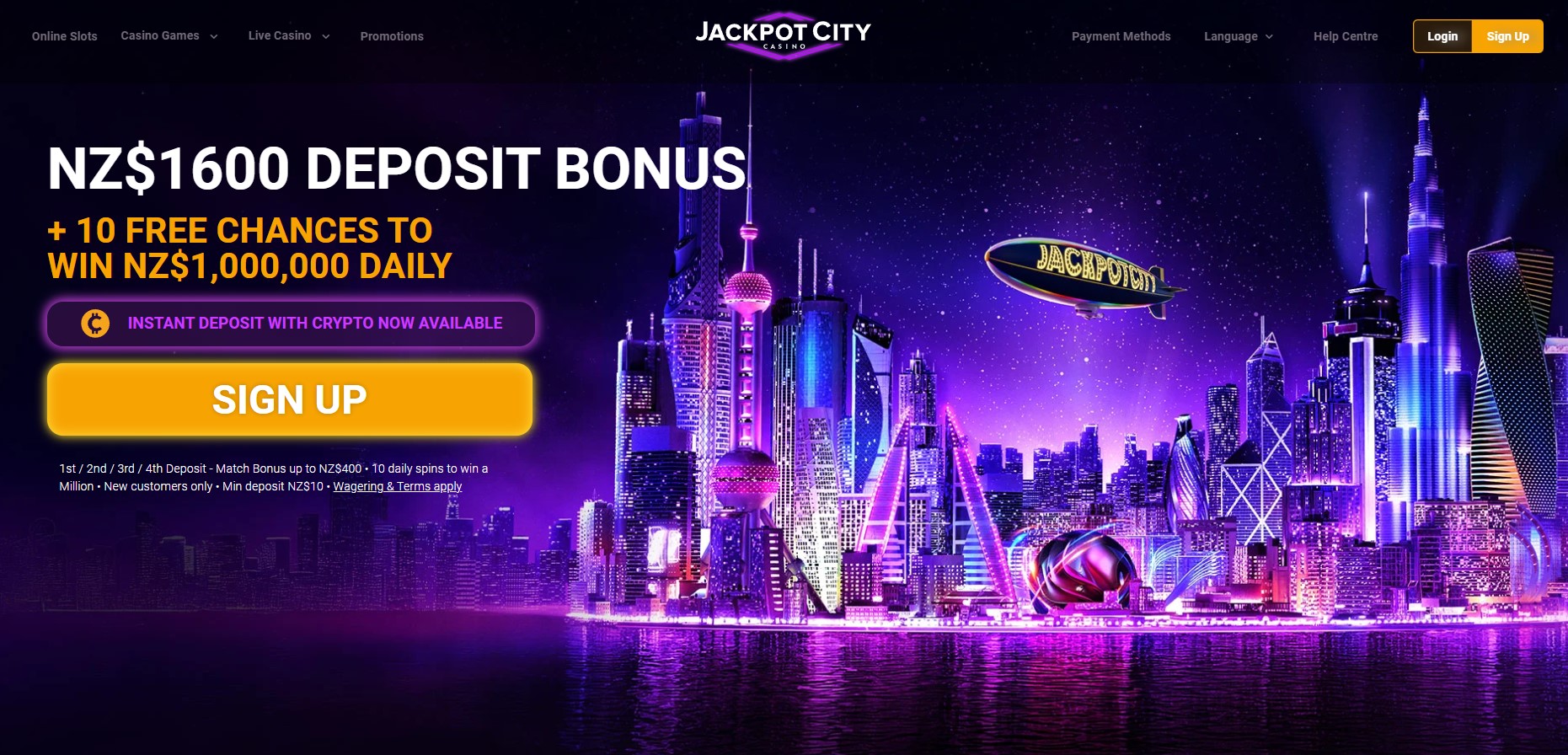
Read those two lines together. The NZ$1,600 is four separate matches of up to NZ$400, which you only reach by making four qualifying deposits. The minimum deposit is NZ$10, the offer is for new customers only, and wagering and terms apply to all of it.
The sister brand does the same thing with a smaller number. Ruby Fortune’s headline is NZ$750, and its small print reads 1st, 2nd and 3rd deposit, match bonus up to NZ$250. Spin Casino leads with NZ$1,000. Three brands, one company, three different headline figures assembled the same way.
| Brand | Headline | How it is actually built | Minimum deposit |
|---|---|---|---|
| Jackpot City | NZ$1,600 | 4 deposits, match up to NZ$400 each | NZ$10 |
| Ruby Fortune | NZ$750 | 3 deposits, match up to NZ$250 each | NZ$10 |
| Spin Casino | NZ$1,000 | Headline only on the landing page, terms behind the link | Not stated on the landing page |
None of this is hidden, and none of it is unusual. It is simply not what the headline says. The figure that matters to you is the match on the first deposit, because that is the only one you can evaluate before spending anything.
The other half is the wagering requirement. When we tested the Jackpot City welcome offer in September 2026, the terms stated 70 times the bonus amount with a 7 day expiry. On a NZ$50 bonus that is NZ$3,500 staked before anything derived from it can be withdrawn. Pokies counted 100 percent, table games counted 10 percent, and live dealer games were excluded from wagering entirely, which did not appear on the promotion page itself. Our review method explains how we record this.
What new sites genuinely do better, and what they cannot
There are real advantages to a recently built platform, and they are mostly technical.
- Mobile first interfaces. Newer lobbies are usually built for the phone first rather than shrunk down from desktop, which shows in search, filters and how quickly a game opens.
- Wider instant win and crash catalogues. Titles like Aviator and similar instant win formats appear on newer platforms far more often than on long established ones.
- Newer payment rails. Crypto deposits, for instance, are advertised on Jackpot City’s New Zealand landing page, and are more common on recent platforms than older ones.
- Larger opening offers. A brand with no reputation has to buy attention, which is why the headline numbers are bigger.
What a new site cannot have is a payout record. The single most useful thing about an established operator is that people have already tried to take money out of it. Everything else on a casino site can be built in a week. A history of paying cannot.
That is also why our scores only come from recorded tests. We have completed full deposit and withdrawal tests at two operators, and where we have not tested a category we mark it Not tested rather than guessing. There is more on what those tests measured on our fast withdrawal casinos page.
Checking a casino that claims to be new
- Find the company in the footer. A legal entity, ideally with a company number and a registered address. No company name, no account.
- Find the licence number and regulator on the same line, then verify it on the regulator’s own site rather than the casino’s. A Malta seal should open on authorisation.mga.org.mt and list the domain you are on.
- Search that licence number. If six other brands come back, you have found a group, not a new casino.
- Check the copyright year and the terms date, then compare them with the licence issue date. A 2019 copyright line under a 2026 licence means a rebadge, not a launch.
- Read the small print under the welcome offer before the offer itself. Look for how many deposits the headline is spread across, the minimum deposit, the wagering multiple, the expiry and any excluded games.
- Open the payment methods page and look for a withdrawal column, not just a row of logos. A method that only takes deposits cannot pay you back.
- Find the account controls. Deposit limit, loss limit, time out and self exclusion should be reachable in under a minute.

When the market changes again
Two dates will reshape this page. On 1 December 2026, any provider that has not lodged a licence application has to stop offering online casino gambling in New Zealand, so some brands currently marketed as new will simply go. From the first half of 2027, DIA expects to start granting licences, and a genuinely new casino will then mean something it does not mean today: a brand that holds one of up to 15 New Zealand licences.
Until then, treat a new arrival as the least verifiable option on the table, not the most exciting one.
If gambling is not staying fun
A large welcome offer is designed to make a first deposit feel small and a fourth deposit feel normal. If play is becoming hard to control, use the deposit and loss limits in your account, take a time out, or use self exclusion at every operator you hold an account with, remembering that New Zealand has no shared exclusion register yet.
Free, confidential help is available 24 hours a day from Gambling Helpline Aotearoa on 0800 654 655 or by free text to 8006. There are also dedicated lines: Māori 0800 654 656, Pasifika 0800 654 657, debt 0800 654 658 and youth 0800 654 659. Web chat is at gamblinghelpline.co.nz. You must be 18 or over to gamble.
Questions we get asked
Are new online casinos safe for New Zealand players?
Safety is not decided by how new a site is. It is decided by who the operator is, which regulator it answers to, whether there is a named dispute resolution route and whether it pays. A new brand has the same overseas licences available to it as an old one, but no payout record for anyone to check.
Can a casino launch in New Zealand right now?
Not lawfully as a new entrant. From 1 May 2026 new offshore operators were barred from starting to offer to New Zealand customers, and the transitional right belongs only to those already here on that date.
Why do new casinos offer bigger bonuses?
Because they have nothing else to compete on yet. Look at how the headline is assembled: NZ$1,600 at Jackpot City is four matches of up to NZ$400 across four deposits, and NZ$750 at Ruby Fortune is three matches of up to NZ$250.
How can I tell if a new brand belongs to an existing group?
Read the footer and compare the company name and licence number with other brands. We found seven casinos sharing Baytree Interactive Ltd (69691) and Kahnawake licence 01059, and none of them mentioned the others.
Does a recent licence date mean the casino is new?
No. A licence issued on 26 August 2026 means the current permission is recent. The same company can have held licences elsewhere for years, which is the case for the group above.
What happens to new casinos on 1 December 2026?
Any provider that has not lodged a licence application must stop offering online casino gambling to people in New Zealand. Those that have applied may continue, without advertising, until their application is decided or until 1 June 2027, whichever comes first.
Is a bigger welcome offer worth chasing?
Only if you have read the wagering requirement, the expiry and the excluded games. A 70 times requirement on a NZ$50 bonus means NZ$3,500 staked within the expiry window, and at the brand we tested live dealer games did not count towards it at all.
Sources
- Department of Internal Affairs, Online Casino Gambling, including its published Q&As, version 3.0, 17 July 2026
- Online Casino Gambling Act 2026
- Operator landing pages, footers and terms at jackpotcitycasino.com, rubyfortune.com, spincasino.com, royalvegascasino.com, gamingclub.com, platinumplay.com and luckynuggetcasino.com, read 24 September 2026
- Malta Gaming Authority dynamic seal of authorisation
- Gambling Helpline Aotearoa

About the author: Matt Donaldson
Editor and casino reviewer, Christchurch
I check the player journey, including the terms, games, support and account controls. A payment result appears as first-hand evidence only when it is in the recorded test.
Each category score is based on what was observed. If a feature was not checked, it is marked Not tested.
Read Matt's profileClear reviews for New Zealand readers, built from recorded observations and updated when the source or market status changes.
- Evidence before adjectives — each claim is tied to an action, source, date, device, amount or operator reply recorded during the review.
- Four categories kept separate — Player Safety & Trust, Games & Usability, Bonuses & Terms, and Banking & Withdrawals are assessed on their own evidence.
- Honest scores — whole points from 1 to 5 only. When a category was not checked directly, it is marked Not tested.
- New Zealand status checked — access, transitional permission, an application and an issued DIA licence are described as different things.
- Updates stay visible — time-sensitive terms and regulatory claims are checked again, and confirmed errors are corrected.
